Michigan Suppressors After the 2026 NFA Ruling: What Gun Owners Need to Know

If you own or are considering purchasing a suppressor in Michigan, you have probably seen the headlines about the recent federal court ruling involving the National Firearms Act.

Updated August 21, 2026

Vector silhouette map of State of Michigan. Simple map of American state.

The seven-day stay on the court’s injunction has expired, and the first suppressor transfers covered by the injunction have reportedly taken place without Form 4 approval or federal NFA registration.

That naturally raises an important question for Michigan gun owners:

Can Michigan residents now purchase a suppressor without going through the traditional NFA approval process?

Not necessarily. While the recent federal court ruling has significantly changed the federal NFA landscape, Michigan has its own statute governing suppressors, and the interaction between the federal ruling and Michigan law is not yet fully settled.

The Ruling Is Not Necessarily the Final Word

Although the seven-day period for the Department of Justice to seek an emergency stay has expired and the injunction is currently in effect for those covered by the court’s order, the case is not necessarily over.

According to current guidance from the National Shooting Sports Foundation, the Department of Justice still has until October 5, 2026, to appeal the final judgment or seek a stay while an appeal proceeds.

That means the legal landscape could change again.

An appeal could challenge the court’s ruling, seek to narrow its scope, or ultimately result in a different outcome. Until the appeal period has passed, and potentially while any appeal is being litigated, there remains significant uncertainty about the long-term status of the court’s decision.

For Michigan gun owners, this is another reason not to assume that the current federal injunction permanently eliminates the traditional NFA process.

Michigan Law Still Matters

Michigan law specifically addresses mufflers and silencers under MCL 750.224.

The statute generally prohibits the manufacture, sale, offering for sale or possession of a muffler or silencer, subject to specific exceptions contained in Michigan law.

One of those exceptions applies to a person licensed by the federal government to manufacture, sell or possess the device.

That creates an important question following the federal court ruling:

If federal law no longer requires ATF registration or approval for a particular suppressor transaction, does that transaction still satisfy Michigan’s separate statutory exception?

That is an important question for Michigan dealers and gun owners.

The federal ruling did not strike down Michigan’s statute.

The Federal Injunction Does Not Automatically Change Michigan Law

The federal court ruling concerns the federal government’s enforcement of certain NFA provisions.

It does not invalidate state firearms statutes.

That means Michigan’s existing laws remain relevant even where a particular transaction may be protected under the federal injunction.

The National Shooting Sports Foundation has specifically reminded the firearms industry that state laws continue to apply and that the effect of the federal injunction depends on the wording of each state’s individual laws.

In some states, state law specifically references federal NFA registration or compliance. In others, the language is different.

That makes it important to distinguish between what federal law currently allows for a protected transaction and what Michigan law independently requires. The federal injunction does not eliminate or override an independent requirement imposed by Michigan law. If Michigan law requires compliance with federal NFA registration or otherwise restricts possession of a suppressor, the federal court’s ruling does not automatically invalidate that state requirement.

The federal injunction does not eliminate or override an independent requirement imposed by Michigan law. If Michigan law requires compliance with federal NFA registration or otherwise restricts possession of a suppressor, the federal court’s ruling does not automatically invalidate that state requirement.

Who Is Actually Protected by the Federal Injunction?

Another important point is that the federal injunction is not a blanket exemption for every firearm owner.

The injunction applies to the named plaintiffs and qualifying members and customers covered by the court’s judgment.

That means simply being a Michigan resident does not make someone a beneficiary of the injunction.

Likewise, seeing an article online, belonging to an organization or presenting a membership card does not automatically establish that a particular transaction is covered.

The exact organization, customer, dealer, firearm and transaction can matter.

What About Form 4s?

For qualifying transactions covered by the federal injunction, certain NFA Form 4 registration and transfer approval requirements have been enjoined.

However, that does not mean a suppressor transaction becomes completely paperwork-free.

The Gun Control Act was not enjoined.

A qualifying transaction still requires the applicable Form 4473 and background check, along with the other federal firearms recordkeeping and marking requirements that remain in effect.

So even under the federal injunction, “no Form 4” does not mean “no paperwork.”

Why Red Circle Tactical Is Continuing the Existing Process

At this point, there are still too many unanswered questions for us to change our established Michigan suppressor procedures based solely on the federal ruling.

Among the issues that remain important are:

  • How the federal injunction interacts with Michigan’s suppressor statute.
  • Whether a particular customer is actually protected.
  • Whether a particular transaction qualifies.
  • How affected suppressors should move through the manufacturer, distributor and dealer chain.
  • What records should be maintained.
  • How an unregistered suppressor should be handled if it later crosses state lines.
  • What happens if the firearm is sent out for repair.
  • How a dealer would document the legal basis for the transaction years later.
  • Whether additional federal or state guidance changes the analysis.

These are not questions we believe should be answered at the gun counter by a customer, a social-media post or an internet article.

What Is Red Circle Tactical Doing?

For now, Red Circle Tactical is continuing to follow the established NFA process for suppressor transfers in Michigan.

We are closely monitoring the federal litigation, NSSF guidance, ATF developments and any additional information concerning Michigan law.

We recognize that the federal ruling could ultimately result in a significant change in how suppressors are transferred.

But until we can verify that a particular transaction satisfies both federal and Michigan law, we will continue using the established process.

That isn’t ignoring the court ruling.

It is making sure we understand exactly what the ruling means before putting a customer or our FFL at risk.

What Should Michigan Customers Do?

If you are considering purchasing a suppressor, don’t assume that the federal headlines mean you can immediately take one home without a Form 4 in Michigan.

If you have questions about a particular transaction, we’re happy to discuss the current process with you.

However, we cannot currently offer a no-Form-4 transfer based solely on a customer’s membership in an organization, an internet article or another dealer’s transaction.

The federal situation is still developing, and additional guidance could change the process.

NSSF has also noted that many questions remain unanswered regarding how the federal injunction interacts with state laws that regulate suppressors. For Michigan gun owners, that distinction is especially important. A transaction may be protected from certain federal NFA requirements while still raising separate questions under Michigan law.

What Happens Next?

The current situation is still developing.

The Department of Justice declined to seek an emergency stay, allowing the injunction to take effect for the parties and transactions covered by the court’s order. However, the DOJ still has until October 5, 2026, to appeal or seek a stay of the final judgment.

At the same time, NSSF has requested additional guidance from ATF so that FFLs can better understand how to comply with the court’s ruling.

At the state level, questions concerning Michigan’s own suppressor law remain important regardless of what happens with the federal litigation.

In other words, the fact that the injunction is currently in effect does not mean the legal questions surrounding suppressor transfers are permanently settled.

We will continue monitoring the federal case, ATF guidance and developments concerning Michigan law.

If the situation changes in a way that allows us to safely and lawfully streamline suppressor transfers in Michigan, we will adjust our procedures accordingly.

The Bottom Line for Michigan Gun Owners

The federal NFA ruling is a major development.

But it does not automatically eliminate Michigan’s suppressor laws, and it does not mean every Michigan resident can simply bypass the traditional NFA process.

For now, Red Circle Tactical will continue following the established NFA transfer process while we monitor the situation.

When something changes that we can actually act on, we’ll let you know.

This article is provided for general informational purposes and is not legal advice. Federal and state firearms laws are subject to change, and individual circumstances can affect the legality of a particular firearm or transaction. Customers with questions about their specific circumstances should consult qualified legal counsel.
There is a group of scammers on Telegram and WhatsapApp and likely other sites and apps impersonating us.

Scammers Targeting Customers with Fake International Shipping

Scammers impersonating our company have been targeting Spanish-speaking customers with false promises of international firearm shipping. They make promises of guaranteed shipping and claim to have connections that allow them to bypass customs inspections, including through supposed diplomatic exemptions.

The scheme follows a predictable pattern (there are of course variations): victims are told to pay for the product, then charged again for “shipping,” and later hit with a fake “delivery agent fee.” A few days later, the scammers claim the delivery agent was detained and fined — and demand that the customer pay the supposed fine. In the end, the victim never receives anything.

Do not send them any money. These scammers will take your payment and deliver nothing. This type of fraud is common — they impersonate legitimate businesses like ours to appear credible, advertising firearms and claiming they can ship worldwide while using stolen or staged photos to look legitimate.

Even if they attempted to ship a firearm internationally, it would almost certainly be intercepted by customs and never reach the buyer. In some cases, authorities may even allow the package to be delivered specifically to detain the recipient, which can lead to arrest. Legitimate dealers log every firearm, and any attempt to ship firearms overseas through regular carriers can result in serious criminal charges.

To be absolutely clear: we will never ask anyone to send us money through social media, messaging apps, or any other platform. You can only purchase from us through our official website or in person at our physical store, using secure, legitimate payment methods.

We do not ship outside the USA. Anyone who claims otherwise or asks for payment on our behalf is running a scam.

Our only official contact is:

  • redcircletactical.com
  • instagram.com/redcircletactical
  • facebook.com/redcircletactical

we do not use X, Facebook Marketplace, Telegram or WhatsApp to sell firearms.

We DO NOT ship firearms to any country other than the USA.

Thanks!


Ahora, en Español:

Hay un grupo de estafadores en Telegram y WhatsApp, y probablemente en otros sitios y aplicaciones, que se hacen pasar por nosotros.

Estafadores Dirigidos a Clientes con Falsos Envíos Internacionales

Estafadores que se hacen pasar por nuestra empresa han estado apuntando a clientes de habla hispana con falsas promesas de envío internacional de armas de fuego. Hacen promesas de envío garantizado y afirman tener conexiones que les permiten evadir las inspecciones aduaneras, incluyendo supuestas exenciones diplomáticas.

El esquema sigue un patrón predecible(por supuesto, hay variaciones): se le dice a la víctima que pague por el producto, luego se le cobra nuevamente por el “envío” y, más tarde, se le impone un supuesto “cargo del agente de entrega”. Unos días después, los estafadores afirman que el agente de entrega fue detenido y multado — y exigen que el cliente pague la supuesta multa. Al final, la víctima nunca recibe nada.

No les envíe dinero. Estos estafadores tomarán su pago y no entregarán nada. Este tipo de fraude es común: se hacen pasar por empresas legítimas como la nuestra para parecer creíbles, anunciando armas de fuego y afirmando que pueden enviarlas a cualquier parte del mundo, usando fotos robadas o montadas para que parezcan reales.

Incluso si intentaran enviar un arma de fuego internacionalmente, casi con toda seguridad sería interceptada por la aduana y nunca llegaría al comprador. En algunos casos, las autoridades incluso pueden permitir que el paquete se entregue específicamente para detener al destinatario, lo que puede llevar a un arresto. Los distribuidores legítimos registran cada arma de fuego, y cualquier intento de enviar armas a otros países a través de transportistas regulares puede resultar en graves cargos penales.

Para dejarlo absolutamente claro: nunca pediremos a nadie que nos envíe dinero a través de redes sociales, aplicaciones de mensajería o cualquier otra plataforma. Solo puede comprar con nosotros a través de nuestro sitio web oficial o en persona en nuestra tienda física, usando métodos de pago seguros y legítimos.

No realizamos envíos fuera de los Estados Unidos. Cualquiera que afirme lo contrario o solicite pagos en nuestro nombre está llevando a cabo una estafa.

Nuestros únicos contactos oficiales son:

  • redcircletactical.com
  • instagram.com/redcircletactical
  • facebook.com/redcircletactical

No usamos X, Facebook Marketplace, Telegram ni WhatsApp o cualquier app app para vender armas de fuego.

NO ENVIAMOS armas de fuego a ningún país que no sea EE. UU.

New Michigan Firearm Regulations Go Into Effect on 2/13/2024

Urgent Michigan Firearm Industry Alert: New Requirements Going Into Effect As a result of strict gun control legislation passed and enacted in Michigan in 2023, the new year means new requirements will go into effect on Tuesday, February 13, 2024, for Michigan firearm industry businesses, including retailers and manufacturers.


Please review the following critical information below. This information compiled by the National Shooting Sports Foundation is for informational purposes only and is not intended to constitute legal advice.

  Public Acts 14, 15, 16, 17 of 2023 2023 PA 17 (S.B. 79), amends MCL 28.429 (1927 PA 372), the handgun licensure act, imposes requirements on an individual who stores or leaves a firearm unattended on premises under the individual’s control, or who enters onto the premises of another individual and stores or leaves a firearm unattended on those premises, and who knows or reasonably should know that a minor (individual less than 18 years of age) is, or is likely to be, present on those premises. The amendments to the Act requires an individual to one or more of the following: Store the firearm in a locked box or container; Keep the firearm unloaded and lock the firearm with a locking device that is properly engaged to render the firearm inoperable by anyone other than the owner or authorized user. Alternatively, the owner of a firearm can keep the firearm in a locked container in the owner’s vehicle, or keep the firearm unloaded in the vehicle, lock the firearm with a locking device, and lock the vehicle. An individual who fails to comply with these requirements is guilty of a felony if a minor obtains the firearm, discharges it, and inflicts death or serious impairment of a body function upon themselves or another individual.    
The Act also amends MCL 28.435 and imposes the following requirements on a federal firearms licensee (FFL): The sale of a firearm must include a commercially available trigger lock or other device designed to disable the firearm and prevent the discharge of the firearm; OR The sale of the firearm must include a commercially available gun case or storage container that can be secured to prevent unauthorized use of the firearm. These requirements can be waived if the purchaser presents a locking device or storage container to the FFL dealer at the time of sale together with a copy of the purchase receipts for the dealer to keep. Upon sale of the firearm the FFL dealer is required to sign a statement and require the purchaser to sign a statement that the requirements described above have been met.
An FFL dealer is prohibited from selling a firearm in Michigan unless the sale is accompanied by a free brochure or pamphlet that includes safety information on the use and storage of the firearm in a home environment. The bill additionally requires the sale to include the lethal means counseling literature published by DHHS and a written warning informing the purchaser of the penalties for failing to store or leave a firearm as required by the bill. In addition, the act requires a FFL dealer to post a notice regarding firearms storage in a conspicuous manner at the entrances, exits, and all points of sale on the premises where firearms are sold.

  2023 PA 81 and 82 amend the Use Tax Act and the General Sales Tax Act (MCL 205.54ll and MCL 205.94ll) to exempt firearm safety devices from the sales and use taxes beginning 90 days after the applicable bill’s effective date and through December 31, 2024. Firearm safety devices means equipment that is designed to prevent unauthorized access to, or operation or discharge of, a firearm and is either of the following: A device that, when installed on a firearm, is designed to prevent the firearm from being operated without first deactivating the device. A gun safe, gun case, lockbox, or other device that is designed, in light of materials used, to prevent access to a firearm by any means other than a key, a combination, biometric data, or other similar means. However, the term does not include a glass-faced cabinet or other form of storage that is primarily designed to allow for the display of firearms. The bills require a seller to provide to the purchaser, upon the retail sale or transfer of a firearm, a notice that says: “The state of Michigan has exempted the sale of firearm safety devices from the sales and use tax imposed by this state through December 31, 2024.” The notice also must be posted in a conspicuous manner at all points of sale on the premises where firearms are sold.
2023 PA 18 (HB 4142) 2023 PA 18 amends various provisions of the Michigan Penal Code that prescribe criminal penalties for violations of section 2 of the handgun licensure act. The bill changes references from “pistols” to “firearms” in provisions that describe violations of the House Fiscal Agency HBs 4138, 4142, and 4143 as enrolled Page 5 of 6 handgun licensure act. The bill would not change the penalties themselves. (Note that pistol and firearm have the same definitions as in HB 4138.) A person who knowingly sells a pistol without complying with section 2 of the handgun licensure act is guilty of a misdemeanor punishable by imprisonment for up to 90 days or a fine of up to $100, or both.
2023 PA 19 (HB 4138) 2023 PA 19 amends various statutes regulating the sale of firearms. The Act amends MCL 28.422 to require an individual to obtain a license to purchase a pistol in most situations prior to the actual purchase. The Act is written in broad terms to include firearms generally, but as will be discussed, in most situations the purchase of firearms other than pistols do not generally require a license to be obtained prior to purchase.
The Act amends MCL 28.422a to state that no separate license is required to purchase a firearm (including a pistol) by an individual who holds a valid CPL (unless the individual was issued on an emergency CPL under section 5a(4) or has a receipt serving as a CPL under section 5b(9) or 5l(3); in that case a separate license is required); the individual is an FLF dealer; or the individual is a police officer. Upon purchase, the seller is required to report the sale to MSP with the purchaser’s CPL license number; the FLF number; or the MCOLES number. All other pistol sales require the separate license. The Act adds MCL 28.422a(1)(d), which states the sale of firearms other than a pistol does not require a separate license if the purchaser has a federal national instant criminal background check performed by an FFL dealer not more than 5 days before the purchase. The seller must report the details of the sale to MSP as required by the statute.

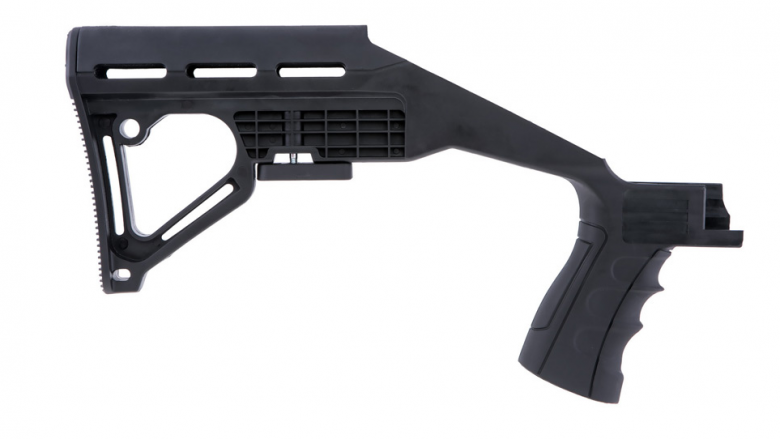
GOA Pro 2nd Amendment Group Files Lawsuit To Challenge ATF Bump Stock Ban

The Gun Owners of America, The Gun Owners Foundation, The Virginia Citizens Defense League on Wednesday filed a lawsuit in the Michigan
Sixth Circuit Court of Appeals against Acting Attorney General Matt Whitaker over the bump stock ban.

You can read more here as well as see the full text of the lawsuit:

https://townhall.com/tipsheet/bethbaumann/2018/12/26/another-cluster-of-pro-gun-groups-challenge-atfs-illegal-and-unconstitutional-n2538088

US House Passes Both Concealed Carry and Fix NICS Legislation

The House of Representative passed HR38 which includes the Concealed Carry Reciprocity Act (CCR)  and the Fix NICS Act.

The CCR act will allow legally licensed concealed carry in any state that issues permits regardless of which state issued a permit. This will make it easier to travel with a lawfully concealed firearm.

The Fix NICS legislation is designed to make sure NICS contains updated disqualifying information so that firearm purchase background checks are correct.


concealed carry image