
Michigan Suppressors After the 2026 NFA Ruling: What Gun Owners Need to Know

If you own or are considering purchasing a suppressor in Michigan, you have probably seen the headlines about a major federal court ruling that has changed the landscape surrounding the National Firearms Act.

August 13, 2026

Vector silhouette map of State of Michigan. Simple map of American state.

The seven-day stay on that ruling has now expired, and the first suppressor transfers under the court’s injunction have reportedly taken place in Texas without ATF Form 4 approval or federal NFA registration.

Can Michigan residents now purchase a suppressor without going through the traditional NFA approval process?

Not necessarily. While a recent federal court ruling has significantly changed the federal NFA landscape, Michigan has its own statute governing suppressors, and the interaction between the federal ruling and Michigan law is not yet fully settled.

Michigan Law Still Matters

Michigan law specifically addresses mufflers and silencers under MCL 750.224. The statute prohibits a person from manufacturing, selling, offering for sale, or possessing a muffler or silencer, subject to specific exceptions contained in the law.

One of those exceptions applies to a person licensed by the federal government to manufacture, sell, or possess the device.

That creates an important question following the new federal ruling:

If federal law no longer requires ATF registration or approval for a particular suppressor transaction, does that transaction still satisfy Michigan’s separate statutory exception?

That question is important for Michigan dealers and gun owners, and it is one reason we are not rushing to change our procedures.

What Did the Federal Court Actually Rule?

On August 5, 2026, a federal court in Texas issued a significant ruling concerning the NFA’s registration and approval requirements for certain firearms whose federal making and transfer taxes were reduced to zero.

The decision addresses suppressors, short-barreled rifles, short-barreled shotguns and certain AOWs. The court’s injunction is not a blanket nationwide order covering every firearm owner and every transaction. Instead, the relief applies to the parties and other persons or entities covered by the judgment.

The seven-day stay imposed by the court expired after August 12, allowing the injunction to take effect according to its terms.

That is a major development at the federal level.

It does not, however, automatically rewrite Michigan law.

Why You May Be Hearing Different Answers

The federal ruling has already produced different interpretations throughout the firearms industry.

Silencer Shop has stated that qualifying transactions covered by its injunction can proceed without a Form 4 or NFA registration. Two Texas customers were subsequently reported to have received suppressors without Form 4s shortly after midnight on August 13.

Those transactions are significant because they demonstrate that the injunction is being relied upon in actual transfers.

But they do not necessarily establish a universal procedure that every FFL in Michigan can immediately adopt.

For a dealer, several questions still have to be answered before changing established procedures:

  • Is the dealer itself protected by the injunction?
  • Is the customer protected?
  • Does the customer’s particular relationship or membership qualify?
  • Is the particular suppressor covered?
  • What federal requirements still apply to the transaction?
  • What records should the dealer maintain?
  • Does Michigan law independently impose requirements?
  • How should the transaction be documented if the suppressor is not entered into the NFRTR?

These are not questions we are willing to answer based solely on a social-media post or a customer’s interpretation of the court ruling.

What Is Red Circle Tactical Doing?

For now, we are continuing to follow the established NFA process for suppressor transfers in Michigan.

That means we are not releasing suppressors based solely on:

  • Social-media posts
  • Internet articles
  • Membership cards
  • Customer interpretations of the federal ruling
  • Claims that “the NFA is gone”
  • Claims that another dealer has already completed a transfer

This is not because we are ignoring the federal court ruling.

Quite the opposite.

We are watching this closely because the ruling could represent a major change in how suppressors and other affected firearms are regulated at the federal level.

But as a Michigan FFL, we have to consider both federal and Michigan law before changing our procedures.

What Happens Next?

The legal situation is developing quickly.

Additional guidance from ATF or other federal agencies, further court action, or clarification concerning the scope of the injunction could change how dealers handle these transactions.

Michigan authorities could also provide additional direction concerning the interaction between the federal ruling and Michigan’s existing suppressor statute.

Until those issues are sufficiently clear, we believe the responsible approach is to continue following the established process.

What Does This Mean for Michigan Customers?

If you are considering purchasing a suppressor, don’t assume that a headline saying “Form 4s are no longer required” means you can immediately take possession of a suppressor in Michigan without the traditional NFA process.

The federal ruling is real, significant and potentially historic.

But federal law and Michigan law are separate issues.

Until we can verify that a particular suppressor transaction satisfies both federal and Michigan law, Red Circle Tactical will continue using the established NFA transfer process.

We would rather take a little extra time and get this right than put a customer or our FFL at risk by acting on an incomplete interpretation of a rapidly developing legal situation.

We’ll keep watching it. When something changes that we can actually act on, we’ll let you know.

Important Disclaimer

This article is provided for general informational purposes and is not legal advice. Federal and state firearms laws are subject to change, and individual circumstances can affect the legality of a particular firearm or transaction. Customers with questions about their specific situation should consult qualified legal counsel.
A Major Change to the NFA: What the August 2026 Federal Court Ruling Means for Suppressors, SBRs, SBSs and AOWs

August 13, 2026

If you own or have considered purchasing a suppressor, short-barreled rifle, short-barreled shotgun or Any Other Weapon, you have probably seen the headlines this week.

SilencerCo_Osprey_.45
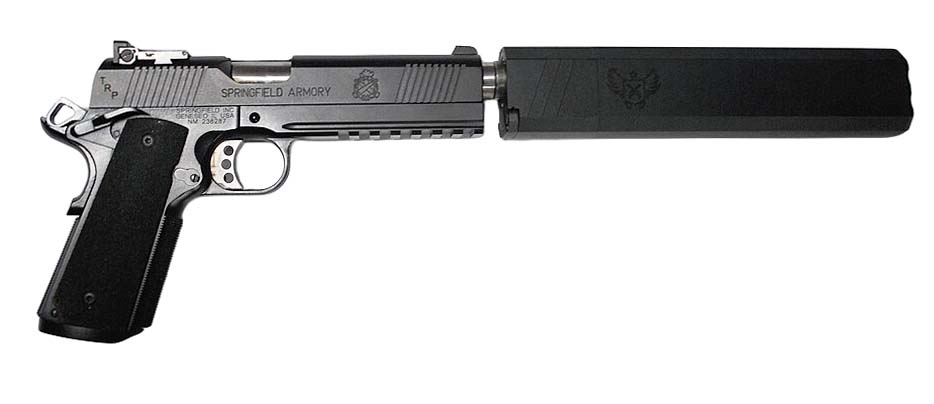
SilencerCo Osprey .45 suppressor on a Springfield pistol. Image by DickClarkMises, Wikimedia Commons, CC0.

A federal court has issued a major ruling challenging the federal government’s ability to enforce certain National Firearms Act registration and approval requirements after Congress eliminated the federal making and transfer taxes on these firearms.

The seven-day stay on that ruling has now expired.

And in the early morning hours of August 13, two Texas suppressor transfers were completed without ATF Form 4 applications or entry into the National Firearms Registration and Transfer Record. Those transactions were specifically structured around parties protected by the court’s injunction.

So, what does all of this actually mean?

The short answer is: the NFA landscape has changed significantly, but it is not as simple as saying “the NFA is gone” or “every suppressor can now be picked up over the counter.”

What Did the Federal Court Decide?

On August 5, 2026, U.S. District Judge James Wesley Hendrix of the Northern District of Texas issued a decision in Silencer Shop Foundation v. ATF, consolidated with Jensen v. ATF.

The court ruled that certain NFA registration and approval requirements for firearms whose federal making and transfer taxes had been reduced to zero could no longer be justified under Congress’s taxing power.

The court’s final judgment permanently enjoins the ATF, DOJ and specified federal officials from enforcing the challenged provisions against the plaintiffs and other parties covered by the judgment.

The ruling addresses:

  • Suppressors
  • Short-barreled rifles
  • Short-barreled shotguns
  • AOWs, subject to specific limitations within the judgment

This is a major development in federal firearms law.

But it is important to understand what the court did not do.

The court did not repeal the National Firearms Act. It did not eliminate every NFA provision. It did not order the government to erase the existing NFRTR. And the injunction is not a universal nationwide exemption covering every firearms dealer and every customer.

The Seven-Day Stay Has Expired

The court initially stayed the effect of its injunction for seven days, giving the federal government an opportunity to seek additional relief.

That stay expired after August 12.

As a result, the injunction is now operative according to its terms.

This is significant because the issue has moved beyond a court ruling that might eventually take effect. Parties covered by the injunction are now relying on it in actual transactions.

The First Suppressor Transfers Without Form 4

Shortly after midnight on August 13, Silencer Shop and Gun Owners of America announced that two specifically structured Texas suppressor transfers had been completed without Form 4 applications or federal NFA registration.

The transactions involved Texas customers who were specifically identified as protected parties in the litigation. The parties notified DOJ and ATF in advance of their intention to conduct the transfers.

These transactions are historically significant.

They demonstrate that the court’s ruling is being put into practice.

But they do not establish that every FFL in the country can immediately abandon the Form 4 process.

That distinction is extremely important for both dealers and customers.

This Is Not a Nationwide “No Form 4” Order

One of the biggest misconceptions surrounding the ruling is that the court simply declared all suppressors, SBRs, SBSs and AOWs to be ordinary firearms for everyone.

That is not what the judgment says.

The injunction is limited to the parties and categories of persons covered by the court’s order. The two Texas transactions were conducted under specifically established circumstances.

Other dealers and customers must determine whether they fall within the protection of the injunction before relying upon it.

As the NRA Institute for Legislative Action has noted, the consolidated litigation involves different groups of plaintiffs, and the injunction applies differently to those groups.

This is why simply showing up at a dealer with a membership card, a screenshot of a website or a social-media post is not enough.

Why FFLs Are Proceeding Carefully

For a firearms dealer, there is a significant difference between understanding the court’s constitutional ruling and having a complete procedure for processing a transaction under that ruling.

An FFL considering a transfer outside the traditional NFA process needs to determine, among other things:

  • Is the dealer protected by the injunction?
  • Is the customer protected?
  • Does the customer’s particular membership or relationship qualify?
  • Does that protection extend to a trust, corporation or LLC?
  • Is the specific firearm covered?
  • What requirements apply earlier in the distribution chain?
  • What forms and records remain necessary?
  • How should the firearm be documented if it is not entered into the NFRTR?
  • How will the dealer demonstrate years later that the transaction was legally protected?
  • What happens if the firearm is later repaired, replaced, inherited or transferred?
  • Are there interstate transportation issues?
  • Does state law impose separate requirements?

These questions are particularly important because the judgment did not create a completely new ATF dealer-recordkeeping system or require the government to redesign its existing eForms system.

The ruling also does not mean that every other NFA provision has disappeared.

What About Interstate Transportation?

There is another important issue that should not be overlooked.

The court’s injunction does not simply erase every provision of the NFA relating to the affected firearms.

In particular, dealers should not assume that the ruling automatically authorizes unrestricted interstate transportation, delivery or receipt of an unregistered NFA firearm.

This is one reason dealers should obtain a clear, documented procedure before changing how they receive, transfer or ship affected firearms.

What About SBRs, SBSs and AOWs?

The August 5 decision is not limited to suppressors.

The court’s ruling addresses short-barreled rifles and short-barreled shotguns as well.

AOWs are also addressed, although the judgment contains specific limitations that make the AOW situation different from simply saying that all AOWs are now exempt from the NFA.

Customers should therefore avoid assuming that the treatment of one NFA category automatically applies to every other category.

The exact firearm, parties involved and protection provided by the injunction matter.

What Has Not Changed?

Several important things remain unchanged.

The NFA has not been repealed.

The statute remains in the United States Code, and provisions that were not affected by the court’s ruling remain enforceable.

Machine guns and destructive devices remain subject to the NFA’s existing tax and regulatory structure.

The existing NFRTR has not simply disappeared.

The court did not order ATF to erase historical registration records or automatically cancel pending applications.

And state firearms laws remain in effect.

That last point is particularly important for anyone considering an NFA firearm.

State Law Still Matters

Federal law and state law are separate questions.

A federal court ruling concerning federal NFA enforcement does not automatically invalidate state statutes governing suppressors, SBRs, SBSs or AOWs.

Some states have independent restrictions, licensing requirements, registration requirements or other rules concerning these firearms.

Therefore, a transaction that may be protected under the federal injunction could still require compliance with separate state requirements.

This is one reason a nationwide “27 free states” or similar classification should not be treated as an official ATF determination. Such classifications are industry interpretations and do not replace an analysis of the law in the state where the transaction occurs.

What Should Customers Do?

If you are considering purchasing a suppressor or another affected firearm, don’t assume that a headline means you can immediately walk into any dealer and take one home without a Form 4.

Ask your dealer how the current federal ruling applies to your specific transaction.

If a dealer tells you that it is continuing to use the existing NFA process, that does not necessarily mean the dealer is ignoring the court decision.

The dealer may be waiting for sufficient guidance and documentation to determine exactly how the injunction applies to its business and its customers.

This is a rapidly developing legal situation. Additional court action, government guidance or changes to dealer procedures could occur.

What This Means at Red Circle Tactical

At Red Circle Tactical, we are closely monitoring the federal litigation and the resulting changes to NFA enforcement.

We recognize the significance of the August 2026 ruling and will continue evaluating what it means for our customers and our business.

However, we will not change our established NFA procedures based solely on internet articles, social-media posts or customer representations.

Any change to our procedures will be based on verified legal and regulatory information and our determination that the specific transaction can be completed lawfully and properly documented under applicable federal and state law.

Our goal is simple: protect our customers while protecting our FFL.

As the situation develops and additional verified guidance becomes available, we will update our customers.

Important Disclaimer

This article is provided for general informational purposes and is not legal advice. Federal and state firearms laws are subject to change, and individual circumstances can affect the legality of a particular firearm or transaction. Customers with questions about their specific legal situation should consult qualified legal counsel.

America’s 250th Birthday | Happy Fourth of July from RCT

Happy 4th of July USA!

American Flag Kayla Feist/USFWS

250 Years of American Independence: Celebrating Freedom, Responsibility, and the Second Amendment

Two hundred and fifty years ago, a small group of determined Americans made a decision that changed history forever.

On July 4, 1776, the Declaration of Independence announced to the world that liberty, self-government, and individual rights were worth defending. Those ideals have carried our nation through wars, hardships, innovation, and generations of Americans committed to preserving the freedoms we enjoy today.

As we celebrate America’s 250th birthday, we take time to appreciate not only our nation’s history, but also the responsibilities that come with freedom.

Freedom Requires Responsibility

The rights protected by the Constitution—including the Second Amendment—have always come with personal responsibility.

Responsible firearm ownership means:

  • Practicing safe handling at all times.
  • Securely storing firearms to prevent unauthorized access.
  • Continuing education and regular training.
  • Respecting the law and fellow citizens.
  • Passing safe firearm habits on to the next generation.

At Red Circle Tactical, we believe responsible gun owners are among the strongest ambassadors for preserving our constitutional rights.

Honoring Those Who Came Before Us

The freedoms we enjoy today were not handed to us. They were earned through sacrifice by countless Americans over the past two and a half centuries.

From the citizens who stood for independence in 1776 to the service members, first responders, and everyday Americans who continue to serve their communities today, this anniversary reminds us that liberty is something worth protecting.

Looking Toward America’s Next 250 Years

While technology, industries, and lifestyles continue to change, the core principles of personal responsibility, individual liberty, and respect for one another remain just as important today as they were 250 years ago.

As firearm owners, hunters, competitive shooters, collectors, and outdoor enthusiasts, we all play a role in promoting safe, lawful, and responsible firearm ownership.

From All of Us at Red Circle Tactical

We would like to thank our customers, veterans, active-duty military, law enforcement officers, first responders, and every American who helps strengthen our communities.

Whether you’re spending Independence Day with family, enjoying the range, attending a local parade, or watching fireworks, we hope you have a safe and memorable Fourth of July.

Happy Independence Day, and Happy 250th Birthday, America!

Memorial Day: Honoring Those Who Served

Every Memorial Day, we pause to remember the brave men and women who gave their lives while serving in the United States Armed Forces. Their courage, sacrifice, and dedication to protecting our freedoms will never be forgotten.

Memorial Day is also a time to reflect on the importance of family, community, and gratitude. Whether attending a local parade, visiting a memorial, flying the American flag, or spending time with loved ones, we honor those who made the ultimate sacrifice for our country.

As we enjoy the long weekend and the start of summer, let us also take a moment to remember the true meaning of this important holiday.

We thank and remember all who served.

My Personal Cannon Safe Experience: Lifetime Warranty Yes, But Not Honored for Me

I purchased a Cannon safe largely because of its advertised lifetime warranty, expecting support if a core mechanical component failed under normal use.

Out of the blue, the safe would not open, but after repeated attempts we were lucky and managed to open it. We planned to never close it again until it was repaired. The safe’s internal locking mechanism had developed excessive slack, meaning the sliding bar could move too far before the lock engaged. On this model, the electronic lock only blocks the sliding bar; it does not move it. Because of the slack, the bar would press against the lock even at rest, creating side load on the lock and making it difficult or impossible to open the safe.

Unfortunately, during repeated troubleshooting steps requested by Cannon — which often felt duplicated or unnecessary — the safe eventually jammed completely and will no longer open.

Over four weeks of back-and-forth with Cannon support, the only resolution suggested was that I hire a locksmith to have the safe drilled open, at my own expense. No repair or replacement was offered for the internal mechanical assembly that failed. In my view, had the underlying issue been properly addressed initially, the safe likely would still be at least open.

Because it became clear that Cannon would not provide a functional repair, I began shopping for a replacement safe. While visiting a large national chain store, the manager asked why I was replacing mine. After hearing my experience, she commented that they recently sold the last Cannon safe they had and hoped not to carry the brand again, citing frequent post-purchase issues reported by customers. That was her observation, not mine.

In my opinion, a lifetime warranty should cover failures that render a safe unusable during normal ownership. My experience shows that this is not always how it works in practice.

Honoring Those Who Served — Veterans Day 2025

Today, we pause to honor the brave men and women who have worn our nation’s uniform. Their service, sacrifice, and unwavering dedication to defending freedom are the foundation of the country we love.

Veterans Day is more than a date on the calendar — it’s a reminder of the courage that built America and the responsibility we all share to protect what they fought for. Whether they served overseas or here at home, every veteran deserves our gratitude and respect.

From all of us at Red Circle Tactical, thank you to every veteran, active-duty service member, and military family. We’re proud to stand in a community that values service, freedom, and the spirit of the American defender.

To all who served — we salute you.

Honoring 250 Years of the United States Marine Corps

On November 10, 2025, the United States Marine Corps will celebrate an incredible milestone — 250 years of service to our nation. Founded in 1775 at Tun Tavern in Philadelphia, the Marine Corps has stood as a symbol of courage, discipline, and unwavering commitment for two and a half centuries.

From the beaches of Iwo Jima to modern-day missions around the world, Marines have answered every call with the same spirit that has defined them since the beginning: Semper Fidelis — Always Faithful.

Each year, Marines past and present mark the occasion with a birthday message from the Commandant and a traditional cake-cutting ceremony — a tradition that connects generations of warriors and reminds us of their shared heritage and sacrifice.

This year’s 250th anniversary holds even deeper meaning. It’s not just a celebration of history — it’s a reflection on what makes the Corps timeless: honor, teamwork, and dedication to something greater than oneself.

To every Marine who has worn the uniform, and to the families who stand beside them — thank you for 250 years of service, strength, and sacrifice.

GLOCK Handgun Lineup Changes: Discontinued Models and the Upcoming V-Series

GLOCK Reshapes Its Handgun Lineup: What You Should Know

We’re tracking a major development in the handgun market: reports indicate that GLOCK is planning a significant shift in its commercial pistol offerings. According to multiple outlets, GLOCK has listed dozens of models as discontinued and may replace much of its current lineup with new “V-Model” variants (though the company has not released a full official confirmation). Newsweek+1
Here are the key points we’re watching:

  • A report from GLOCK’s own website shows a “Discontinued Commercial Pistol Models” list that includes many Gen 3 and Gen 4 models. GLOCK+1
  • Industry rumors suggest that as of November 30, all GLOCK models except perhaps the 43, 43X and 48X will be discontinued, with incoming “V” models designed to prevent conversion to fully-automatic capability. The Economic Times+1
  • The change may be driven by evolving regulations and greater scrutiny over models that can be converted with illicit devices–an angle cited by city officials. WTTW News+1
    What this means for our business and for you:
  • If you own or are considering purchasing a GLOCK model that’s on the discontinued list, now may be a good time to evaluate inventory, parts support and resale value.
  • GLOCK has stated that discontinued models will continue to receive service, so don’t assume support vanishes overnight. GLOCK
  • Stay tuned: we expect full clarity from GLOCK in the coming weeks regarding what models will be replaced, when exactly the “V” models are introduced, and how parts/interchangeability will work.
    At Red Circle Tactical, we’re keeping a close eye on these changes to help you navigate your options. If you want to evaluate whether a particular model is affected drop us a line.

ATF Issues Notice on Pending Pistol Brace NFA Applications

The Bureau of Alcohol, Tobacco, Firearms and Explosives (ATF) has issued a notice to individuals with pending National Firearms Act (NFA) applications to register pistols equipped with stabilizing braces as short-barreled rifles (SBRs).

According to the ATF, applicants have until Monday, November 10, 2025, to request withdrawal of their applications if they choose not to move forward. After that date, any application that hasn’t been withdrawn will continue through the normal processing and approval steps.

Those wishing to withdraw can do so through the ATF eForms system or by contacting the agency via email. Full details and instructions are available on the ATF’s official website HERE

Happy 78th Birthday, U.S. Air Force!

Today, September 18, marks the 78th anniversary of the United States Air Force. While it officially became its own branch of the military in 1947, its story reaches back to the early 20th century, when aviation first began shaping the future of defense.

The defining moment came when President Harry S. Truman signed the National Security Act of 1947. This legislation not only created a new defense structure but also established the Air Force as an independent service, giving it equal standing alongside the U.S. Army and Navy. From that day forward, the Air Force took its place as a cornerstone of America’s national security.

For 78 years, the Air Force has embodied innovation, strength, and resilience, rising to meet challenges in the skies and beyond. Today, we honor its proud heritage, celebrate its achievements, and thank the men and women—past and present—who have dedicated themselves to serving our nation.

Happy Birthday, U.S. Air Force!