Michigan Suppressors After the 2026 NFA Ruling: What Gun Owners Need to Know

If you own or are considering purchasing a suppressor in Michigan, you have probably seen the headlines about the recent federal court ruling involving the National Firearms Act.

UPDATE — October 9, 2026: ATF Announces Nationwide NFA Enforcement Policy

Since this article was originally published, the Bureau of Alcohol, Tobacco, Firearms and Explosives (ATF) has announced a nationwide federal enforcement policy affecting certain National Firearms Act (NFA) requirements for suppressors, short-barreled rifles (SBRs), short-barreled shotguns (SBSs), and certain other weapons (AOWs).

Under this policy, ATF will no longer enforce specified federal NFA approval, registration, and related requirements for covered items. This is an enforcement policy, not a repeal of the NFA, and it does not override state law.

Michigan law presents a separate issue. Michigan’s silencer statute contains an exception tied to federal licensing, and Michigan Attorney General Opinion No. 7260 interpreted that exception in relation to federal approval requirements. ATF has cautioned that it cannot determine whether possession under its federal enforcement policy satisfies a state’s legal requirements.

Red Circle Tactical will continue following its established NFA transfer process for Michigan transactions. Customers should not assume that ATF’s federal announcement automatically eliminates Michigan’s requirements.

For current federal guidance, consult the ATF NFA Transfer Guidance and FAQs and the ATF Open Letter dated October 9, 2026.

Vector silhouette map of State of Michigan. Simple map of American state.

The seven-day stay on the court’s injunction has expired, and the first suppressor transfers covered by the injunction have reportedly taken place without Form 4 approval or federal NFA registration.

That naturally raises an important question for Michigan gun owners:

Can Michigan residents now purchase a suppressor without going through the traditional NFA approval process?

Not necessarily. While the recent federal court ruling has significantly changed the federal NFA landscape, Michigan has its own statute governing suppressors, and the interaction between the federal ruling and Michigan law is not yet fully settled.

The Federal Policy Has Changed

The August 2026 court ruling initially applied to the parties and transactions covered by the court’s injunction. On October 9, 2026, ATF announced a nationwide enforcement policy extending specified non-enforcement provisions to covered items beyond those protected by the original injunction.

The federal policy has therefore changed since this article was first published. However, the announcement does not repeal the NFA or invalidate independent state firearms laws.

For Michigan suppressor owners, the important distinction is that a change in federal enforcement policy does not automatically resolve the requirements imposed by Michigan law.

Michigan Law Still Matters

Michigan law specifically addresses mufflers and silencers under MCL 750.224.

The statute generally prohibits the manufacture, sale, offering for sale or possession of a muffler or silencer, subject to specific exceptions contained in Michigan law.

One of those exceptions applies to a person licensed by the federal government to manufacture, sell or possess the device.

That creates an important question following the federal court ruling:

If federal law no longer requires ATF registration or approval for a particular suppressor transaction, does that transaction still satisfy Michigan’s separate statutory exception?

That is an important question for Michigan dealers and gun owners.

The federal ruling did not strike down Michigan’s statute.

The Federal Injunction Does Not Automatically Change Michigan Law

Michigan law specifically addresses mufflers and silencers under MCL 750.224. The statute generally prohibits manufacturing, selling, offering for sale, or possessing a silencer, subject to statutory exceptions.

Michigan Attorney General Opinion No. 7260 concluded that possession, manufacture, or sale of a silencer is permitted under the applicable exception when the person is licensed or approved by ATF as required by the statute. See the official Michigan Attorney General opinion.

ATF’s October 9 policy changes its enforcement of certain federal NFA provisions. It does not amend MCL 750.224 or determine how Michigan’s statutory exception applies under the new federal policy.

For Red Circle Tactical, the practical result is unchanged: we will continue following the established NFA transfer process for Michigan suppressor transactions. We will not treat ATF’s announcement alone as authorization to bypass that process.

Who Is Actually Protected by the Federal Injunction?

The August 2026 court injunction applied to the plaintiffs and other parties specified in the court’s judgment. Its original scope was limited.

On October 9, 2026, ATF announced a separate nationwide enforcement policy for specified NFA requirements affecting covered SBRs, SBSs, suppressors, and AOWs. The scope of that federal policy is no longer defined solely by membership in an organization or coverage under the original injunction.

However, ATF’s nationwide policy does not resolve whether a particular transaction complies with state law. Michigan requirements must be considered separately.

What About Form 4s?

Under ATF’s October 9, 2026, nationwide enforcement policy, the agency will no longer enforce specified NFA Form 4 approval and registration requirements for covered suppressor transfers at the federal level.

That does not automatically settle the requirements for a Michigan transaction. Michigan law separately regulates silencer possession, and the state’s statutory exception has previously been interpreted in relation to federal licensing and approval.

Red Circle Tactical will continue using the established NFA transfer process for Michigan suppressor transactions. Customers should contact us before ordering or arranging a transfer rather than assume that the federal policy permits a no-Form-4 transaction in Michigan.

Applicable Gun Control Act requirements—including Form 4473, background checks where required, and dealer recordkeeping—remain in effect. ATF continues to accept voluntary NFA applications.

For the current federal position, see the ATF NFA Transfer Guidance and FAQs.

Why Red Circle Tactical Is Continuing the Existing Process

ATF’s October 9 announcement changes the federal enforcement policy, but it does not resolve every issue affecting Michigan suppressor transactions.

The considerations relevant to our established process include:

  • How Michigan’s silencer statute applies under the new federal enforcement policy.
  • The relationship between the state’s statutory exception and federal licensing or approval.
  • Applicable federal and state requirements for the transaction.
  • Required dealer records and documentation.
  • How the transaction should be handled if the suppressor is later transported, repaired, or transferred.
  • The need for a defensible compliance process for both the customer and the dealer.

These are not questions we believe should be resolved at the counter based solely on headlines, online discussions, or another dealer’s practices.These are not questions we believe should be answered at the gun counter by a customer, a social-media post or an internet article.

What Is Red Circle Tactical Doing?

For now, Red Circle Tactical is continuing to follow the established NFA process for suppressor transfers in Michigan.

We are closely monitoring the federal litigation, NSSF guidance, ATF developments and any additional information concerning Michigan law.

We recognize that the federal ruling could ultimately result in a significant change in how suppressors are transferred.

But until we can verify that a particular transaction satisfies both federal and Michigan law, we will continue using the established process.

That isn’t ignoring the court ruling.

It is making sure we understand exactly what the ruling means before putting a customer or our FFL at risk.

What Should Michigan Customers Do?

If you are considering purchasing a suppressor in Michigan, do not assume that ATF’s October 9 federal announcement automatically allows you to take possession without following the established NFA process.

Red Circle Tactical continues to follow that process for Michigan suppressor transfers. Contact us before ordering if you have questions about a particular suppressor or transaction.

ATF’s nationwide policy and Michigan’s separate statutory requirements must not be confused. The federal announcement does not itself amend Michigan law or determine how Michigan’s statutory exception applies.

What Happens Next?

ATF has now published its nationwide enforcement policy and related guidance. Future federal or state developments could still affect how suppressor transactions are handled.

Red Circle Tactical will continue monitoring official ATF guidance, Michigan law, and relevant legal developments. We will change our established Michigan transfer procedures only when we have a verified basis to do so.

For current federal guidance, consult the ATF NFA Transfer Guidance and FAQs.

The Bottom Line for Michigan Gun Owners

TF’s October 9, 2026, announcement significantly changes federal enforcement of certain NFA requirements. It does not repeal the NFA, override state law, or automatically resolve Michigan’s separate requirements for suppressors.

Red Circle Tactical will continue following the established NFA transfer process for Michigan suppressor transactions. Contact us before purchasing if you have questions about the process.

This article is provided for general informational purposes and is not legal advice. Federal and state firearms laws can change, and individual circumstances may affect the legality of a particular transaction. Consult qualified legal counsel about specific circumstances.

This article is provided for general informational purposes and is not legal advice. Federal and state firearms laws are subject to change, and individual circumstances can affect the legality of a particular firearm or transaction. Customers with questions about their specific circumstances should consult qualified legal counsel.
A Major Change to the NFA: What the August 2026 Federal Court Ruling Means for Suppressors, SBRs, SBSs and AOWs

Updated October 09, 2026

UPDATE October 9, 2026: ATF Announces Nationwide NFA Enforcement Policy

Since this article was originally published, ATF has announced a nationwide enforcement policy affecting certain National Firearms Act (NFA) requirements for suppressors, short-barreled rifles (SBRs), short-barreled shotguns (SBSs), and certain other weapons (AOWs).

Effective October 9, 2026, ATF will no longer enforce specified federal NFA approval, registration, and related requirements for these covered items. This policy extends beyond the parties covered by the August court injunction. It is an enforcement policy, not a repeal of the NFA.

Federal Gun Control Act requirements remain in effect, and state and local laws continue to apply. ATF specifically cautions that it cannot determine whether possession under its federal enforcement policy satisfies a state’s legal requirements.

Federal and state law are separate considerations. ATF’s announcement changes its federal enforcement policy but does not override state and local restrictions. Red Circle Tactical will continue to follow its established transfer procedures unless verified guidance establishes that a different procedure can be used lawfully and properly documented.

The original article below explains the August 2026 court ruling and its historical context. References to the October 5 appeal deadline and expectations of future ATF guidance reflect the situation at the time of the original publication and should not be read as a description of the current federal policy.

For current federal guidance, consult the official ATF NFA Transfer Guidance and FAQs and the ATF Open Letter dated October 9, 2026.

A major federal court ruling has significantly changed the landscape surrounding the National Firearms Act, but the practical effect of the decision is more complicated than many headlines suggest.

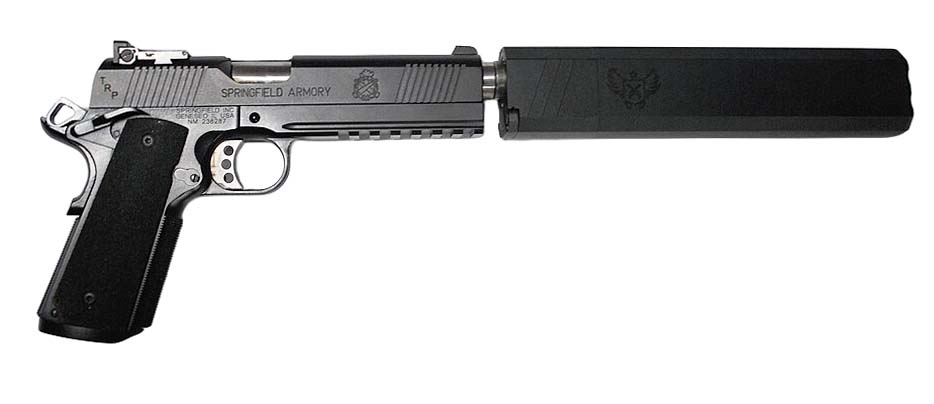
SilencerCo_Osprey_.45
SilencerCo Osprey .45 suppressor on a Springfield pistol. Image by DickClarkMises, Wikimedia Commons, CC0.

If you own or have considered purchasing a suppressor, short-barreled rifle, short-barreled shotgun or Any Other Weapon, you have probably seen the headlines this week.

The ruling affects federal registration and approval requirements for suppressors, short-barreled rifles, short-barreled shotguns and, under more limited circumstances, Any Other Weapons.

The seven-day stay on the court’s injunction has expired, and the injunction is now in effect according to its terms. Two Texas suppressor transfers have also reportedly been completed without Form 4 approval or federal NFA registration under circumstances covered by the injunction.

So, are suppressors now simply “cash and carry”?

No. Not for everyone, and not everywhere.

The court’s decision is significant, but there are still substantial questions about who is protected, what transactions are covered, how dealers should document those transactions, and how federal and state laws interact.

What Did the Court Actually Decide?

In Silencer Shop Foundation v. ATF, consolidated with Jensen v. ATF, a federal court in the Northern District of Texas ruled that certain NFA registration and making/transfer approval requirements could no longer be enforced against parties protected by the injunction.

The ruling addresses suppressors, short-barreled rifles and short-barreled shotguns. The injunction also addresses AOWs, but the protection for AOWs is narrower and applies only to certain plaintiffs.

The underlying issue involves the fact that Congress reduced the NFA’s $200 making and transfer tax on suppressors, SBRs, SBSs and AOWs to zero dollars beginning in 2026. The court concluded that the federal government’s continued use of registration and related requirements for these untaxed items could no longer be justified as an exercise of Congress’s taxing authority.

That is a major constitutional ruling.

But it is important to understand what it does not mean.

The court did not repeal the entire National Firearms Act. It did not eliminate every NFA requirement. And it did not issue a blanket authorization allowing every firearms dealer and every customer in the country to ignore the traditional NFA process.

he Court Ruling and ATF’s Nationwide Policy

The August court ruling initially applied to the parties and transactions covered by the injunction. On October 9, 2026, ATF announced that it would apply specified non-enforcement provisions nationwide through the Department of Justice’s enforcement discretion.

The nationwide policy is broader than the original injunction, but it is not a repeal of the National Firearms Act. Other federal requirements and state and local restrictions remain relevant.

The distinction between the original court order and ATF’s subsequent nationwide policy is important when interpreting reports about the case.

Who Is Actually Covered by the Injunction?

The following explains who was covered by the original August court injunction. Since October 9, 2026, ATF’s announced enforcement policy has extended specified non-enforcement provisions nationwide, so the original injunction’s membership and customer limitations do not define the scope of that agency policy.

The injunction is limited to the plaintiffs, their qualifying current and future members, and, in the case of commercial plaintiffs or commercial members of plaintiff organizations, their current and future customers in covered transactions.

The plaintiffs include organizations and businesses such as Gun Owners of America, Gun Owners Foundation, Firearms Regulatory Accountability Coalition, Silencer Shop Foundation, Palmetto State Armory and others involved in the litigation.

The case also includes several states as plaintiffs.

However, being a resident of one of those plaintiff states does not automatically make every citizen of that state a beneficiary of the injunction.

For an individual who is not a named plaintiff, coverage can depend upon membership in one of the organizations specifically covered by the judgment and the nature of the transaction.

There are also important differences among the plaintiff organizations. For example, NSSF’s current guidance notes that AOW protection does not extend to members of some of the organizations in the same way it does to suppressors, SBRs and SBSs.

In other words:

Membership, customer status, the particular firearm and the parties involved can all matter.

A customer simply showing a membership card or pointing to an article online does not establish that a particular transaction is protected.

What Happens to the Form 4?

Following ATF’s October 9, 2026, announcement, the agency will no longer enforce the specified NFA Form 4 approval and registration requirements for covered suppressors, SBRs, SBSs, and AOWs under its nationwide enforcement policy.

This does not eliminate applicable Gun Control Act requirements. Licensed dealers must still complete Form 4473, conduct required background checks, maintain records, and comply with other applicable federal requirements. State and local restrictions also remain in effect.

ATF continues to accept voluntary NFA applications. The precise requirements applicable to a transaction depend on the firearm and the relevant laws.

The Form 4473 Still Applies

The court did not enjoin the Gun Control Act.

That means suppressors and other affected firearms transferred under the injunction remain subject to applicable GCA requirements, including the federal firearms transaction recordkeeping requirements and background-check requirements.

A qualifying no-Form-4 suppressor transaction is therefore not a transaction with no paperwork.

The customer still needs to complete the applicable Form 4473, and the dealer must comply with the applicable background-check, recordkeeping and marking requirements.

That distinction is important.

What About SBRs and SBSs?

This is where things become even more complicated.

Although the court enjoined certain NFA registration and transfer provisions involving SBRs and SBSs, another federal statute remains in place.

Under 18 U.S.C. § 922(b)(4), a licensed importer, manufacturer, dealer or collector generally cannot sell or deliver a short-barreled rifle or short-barreled shotgun except as specifically authorized by the Attorney General consistent with public safety and necessity.

NFA compliance has historically provided the mechanism for satisfying this federal authorization requirement. However, ATF’s October 9, 2026, announcement changes its enforcement policy concerning certain NFA requirements and covered SBR and SBS transfers.

The interaction between ATF’s new federal enforcement policy and the separate requirements of state law must still be considered. For Michigan transactions, do not assume that the federal policy eliminates the need to follow the established NFA transfer process.

Suppressors and SBRs/SBSs are treated differently under certain federal statutory provisions, so the legal implications of ATF’s announcement should not be generalized across all NFA items.

AOWs Are Different Again

The court also addressed AOWs, but the injunction’s protection is narrower.

The NFA’s AOW provisions were enjoined only with respect to certain Silencer Shop plaintiffs.

NSSF’s current guidance specifically notes that members of some of the other plaintiff organizations do not receive the same AOW protection.

So if you are dealing with an AOW, the exact plaintiff organization, membership and transaction matter even more.

Important Federal Requirements That Still Apply

ATF’s October 9, 2026, policy does not eliminate every federal requirement affecting these firearms.

  • Interstate transportation of SBRs and SBSs: ATF says individuals must continue filing Form 5320.20 (Form 20) before transporting an SBR or SBS across state lines, even if it is not registered in the National Firearms Registration and Transfer Record.
  • Gun Control Act requirements: Applicable Form 4473, background checks, dealer recordkeeping, and other relevant requirements remain in effect.
  • State and local restrictions: ATF’s federal enforcement policy does not override state or local laws restricting particular firearms or their possession.
  • Other NFA firearms: Machine guns and destructive devices remain subject to the applicable NFA requirements, including federal tax and registration provisions.

For the current requirements, consult the official ATF NFA Transfer Guidance and FAQs.whether it can later be transported or transferred across state lines.

The SOT Requirement Has Not Disappeared

The Special Occupational Tax regime for FFLs involved in the manufacture, importation or dealing of NFA firearms was also not eliminated by the ruling.

Congress did not reduce those taxes to zero in the same way it reduced the NFA making and transfer taxes.

That leaves additional questions concerning how manufacturers, distributors and dealers should handle affected NFA firearms, particularly when moving inventory through the commercial chain.

There are also unresolved questions about how an NFA firearm currently appearing in the NFRTR could be removed from the registry without the traditional Form 4 process.

These are practical issues that matter to dealers long after the initial sale.

State Laws Still Apply

The federal injunction does not invalidate state firearms laws.

This is particularly important because states take different approaches to suppressors and other NFA firearms.

Some state laws specifically reference federal NFA registration or compliance. Others use different language.

Consequently, a firearm that may be lawfully transferred under the federal injunction could still raise a separate state-law question.

Federal legality and state legality are not necessarily the same thing.

Customers should not assume that a federal court ruling automatically changes the law in their state.

What Does This Mean for Customers?

ATF’s October 9, 2026, announcement changes the federal enforcement policy for certain NFA requirements affecting suppressors, SBRs, SBSs, and AOWs nationwide.

However, this does not mean that all firearm paperwork disappears or that every item can be transferred without considering other applicable laws.

  • Applicable Form 4473, background checks, and dealer records remain required.
  • State and local restrictions still apply.
  • Interstate transportation rules differ depending on the type of firearm.
  • Machine guns and destructive devices remain subject to the applicable NFA requirements.

Before purchasing, making, transferring, or transporting a covered firearm, verify the requirements that apply to the specific item and transaction.

What Does This Mean for FFLs?

For federal firearms licensees, ATF’s October 9 announcement provides a nationwide enforcement policy for specified NFA requirements. Dealers must still determine which requirements apply to the firearm and transaction.

Important considerations include:

  • Compliance with applicable Gun Control Act requirements.
  • Required Form 4473, background checks, and recordkeeping.
  • State and local laws governing possession and transfer.
  • Requirements for interstate transportation of SBRs and SBSs.
  • Special Occupational Tax obligations for businesses engaged in covered NFA activities.
  • Proper inventory handling and documentation.

Dealers should review ATF’s official guidance and obtain qualified legal advice when the law’s application to a particular transaction is uncertain.

What Is Red Circle Tactical Doing?

At Red Circle Tactical, we are closely monitoring the court ruling, the NSSF guidance and any additional information from ATF and the courts.

The ruling is clearly significant, and we are not dismissing its potential impact on suppressors and other NFA firearms.

At the same time, we are not going to put our CUSTOMERS or our FFL at risk by guessing at unresolved federal or state requirements.

For now, we will continue following our established NFA procedures unless and until we have sufficient verified guidance to determine that a different procedure can be used lawfully and properly documented.

If that changes, we’ll adjust our procedures.

What Happens Next?

ATF’s October 9, 2026, announcement establishes a nationwide federal enforcement policy for certain NFA requirements affecting SBRs, SBSs, suppressors, and AOWs. ATF continues to accept voluntary NFA applications, and material changes in the legal circumstances could affect future enforcement.

The announcement does not eliminate all federal firearm requirements or override state and local law. ATF continues to require applicable Form 4473, background checks, and dealer records. Its guidance also addresses additional requirements that remain relevant to particular firearms and transactions.

For Michigan customers and dealers, state-law compliance remains a separate consideration. Red Circle Tactical will continue monitoring official ATF guidance and developments affecting Michigan law before changing its established NFA procedures.

For the latest federal information, refer to the ATF NFA Transfer Guidance and FAQs.

The Bottom Line

The August 2026 court ruling was followed by ATF’s October 9 announcement of a nationwide federal enforcement policy for specified NFA requirements affecting suppressors, SBRs, SBSs, and AOWs.

The announcement is not a repeal of the NFA. Applicable Gun Control Act requirements remain in effect, state and local restrictions continue to apply, and interstate transportation rules still matter. Machine guns and destructive devices remain subject to the applicable NFA requirements.

Red Circle Tactical will continue monitoring official federal guidance and will update this article if material changes occur.

This article is provided for general informational purposes and is not legal advice. Federal and state firearms laws are subject to change, and individual circumstances can affect the legality of a particular firearm or transaction. Consult qualified legal counsel about specific circumstances.

For current federal guidance, see the ATF NFA Transfer Guidance and FAQs and the ATF Open Letter dated October 9, 2026.

This article is provided for general informational purposes and is not legal advice. Federal and state firearms laws are subject to change, and individual circumstances can affect the legality of a particular firearm or transaction. Dealers and customers with questions about their specific circumstances should consult qualified legal counsel.